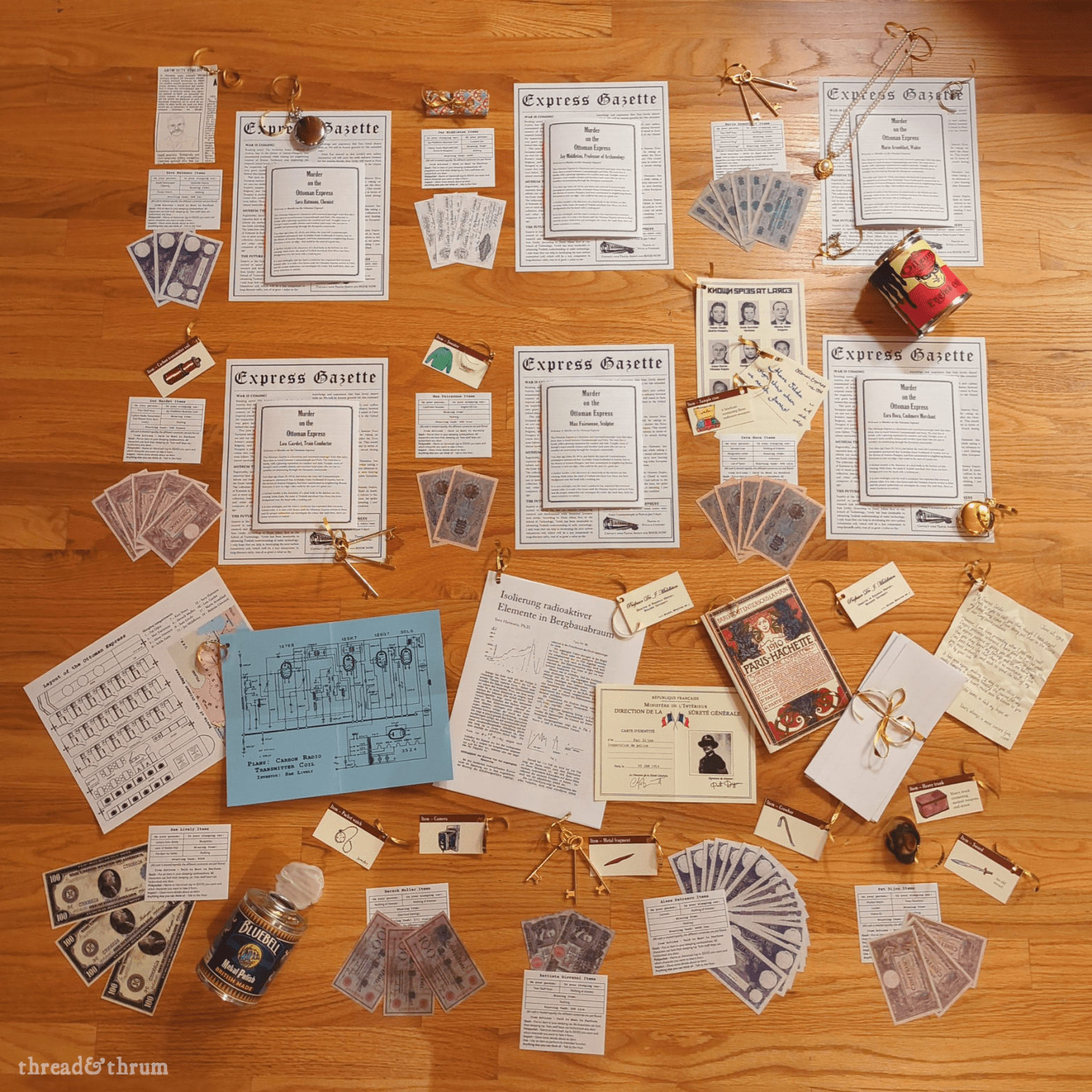
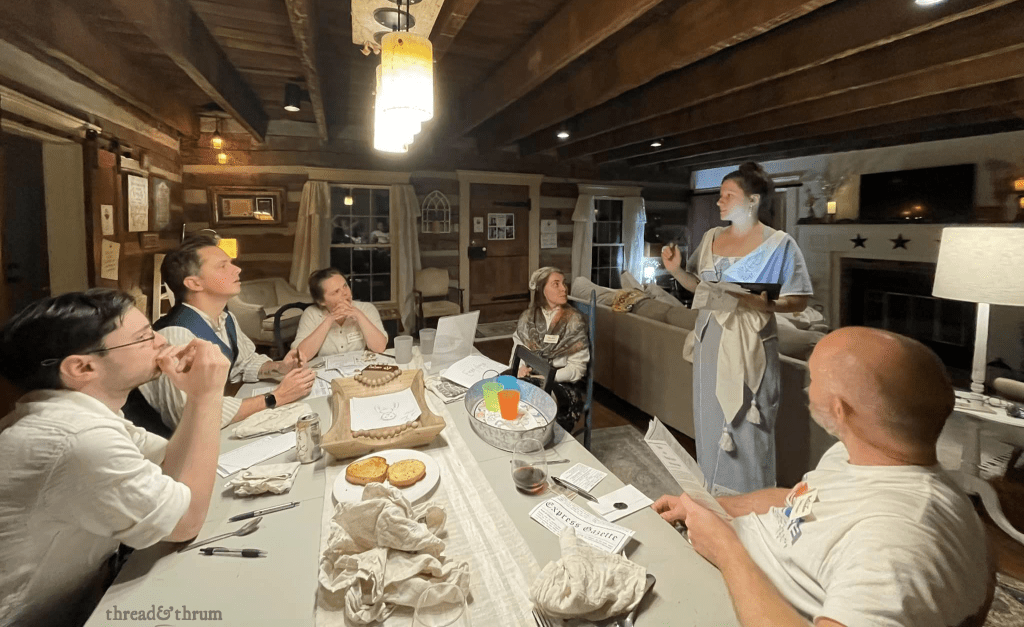
This murder mystery by Freeform Games was hands down the best murder mystery I’ve ever run. The fact that there are some simple game mechanics and a dedicated host character to facilitate the whole experience made this a more satisfying experience for the players and for me as the host than any other pre-written mystery I’ve run or played in. Freeform Games will be my go-to from now on when running murder mystery games, and I will definitely recommend them to friends who enjoy hosting these kinds of parties!
This particular adventure is set in 1914, aboard the luxurious Istanbul Express, a train which travels between Istanbul and Paris, and is populated by a colorful cast of characters for your friends to play. It’s a fun tribute to Agatha Christie’s Murder on the Orient Express, though the similarities between that story and this one are superficial, so anyone familiar with the Christie mystery will not be spoiled for the fun!
Table of Contents
What’s in a name?
This was almost definitely1 an intentional move on the part of the game writers, but it bugs me a little that the train and its eponymous city are called Istanbul, when the city was officially called Constantinople until 1930 (it changed at the creation of the Turkish Republic).
It might have been a move to echo the Agatha Christie story, which is set in the 1930’s (i.e. post name change) and features Istanbul. The city was referred to by that name informally even before the Ottomans took over (especially the inner portion of the city) but since this game is explicitly political (the assassination of Franz Ferdinand is one of the first plot points brought up to players), it feels a little odd to call the city and the train Istanbul, when the Ottoman Empire was such a major player in World War I, and the name Constantinople evokes such specific imagery.
As such, while I left everything else about the game alone (with one small exception2), I did change the name of the train to the Ottoman Express, and changed any mention of Istanbul to Constantinople. The other vote in favor of the name Ottoman Express is that it echoes Orient Express quite nicely (same number of syllables, same syllabic emphasis, both start with O, etc.), so still pays homage to Christie’s story.
Advice for Hosting
Logistics
It goes without saying, but carefully read the instructions, the quick reference guide, and all the character booklets before the night of the party. The more familiar you are with the material, the easier and more fun it will be to run the mystery. This may seem like a lot of work up front, but it honestly only amounts to an hour or so of reading. The instructions also have a suggested pre-party prep timeline that is very helpful to make the night of the party as low-stress as possible!
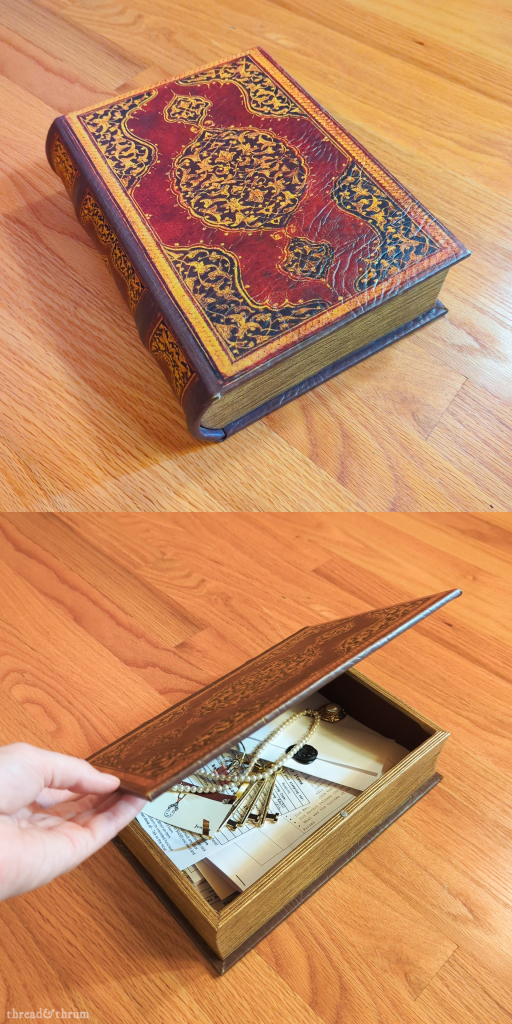
It’s important for the host to have everything they need on their person and to be relatively mobile for private chats with players. There are a few ways to tackle this, but I went with this book safe. It looks cool, has enough space for all the props I needed, could double as an impromptu writing surface, and made it easy to ferry around pickpocketed items without the other players knowing!
Running the Game with Too Few Players
One challenge I had to work around in prepping for this game was that three players dropped out shortly before the party. Luckily, because this game is written with a host character, it was easy to pivot and bring in a concept most players will be familiar with: NPC’s (non-player characters). If you’ve ever run a tabletop roleplaying game (TTRPG), you know that the DM/GM plays all the characters that the players interact with, and this scenario is no different.
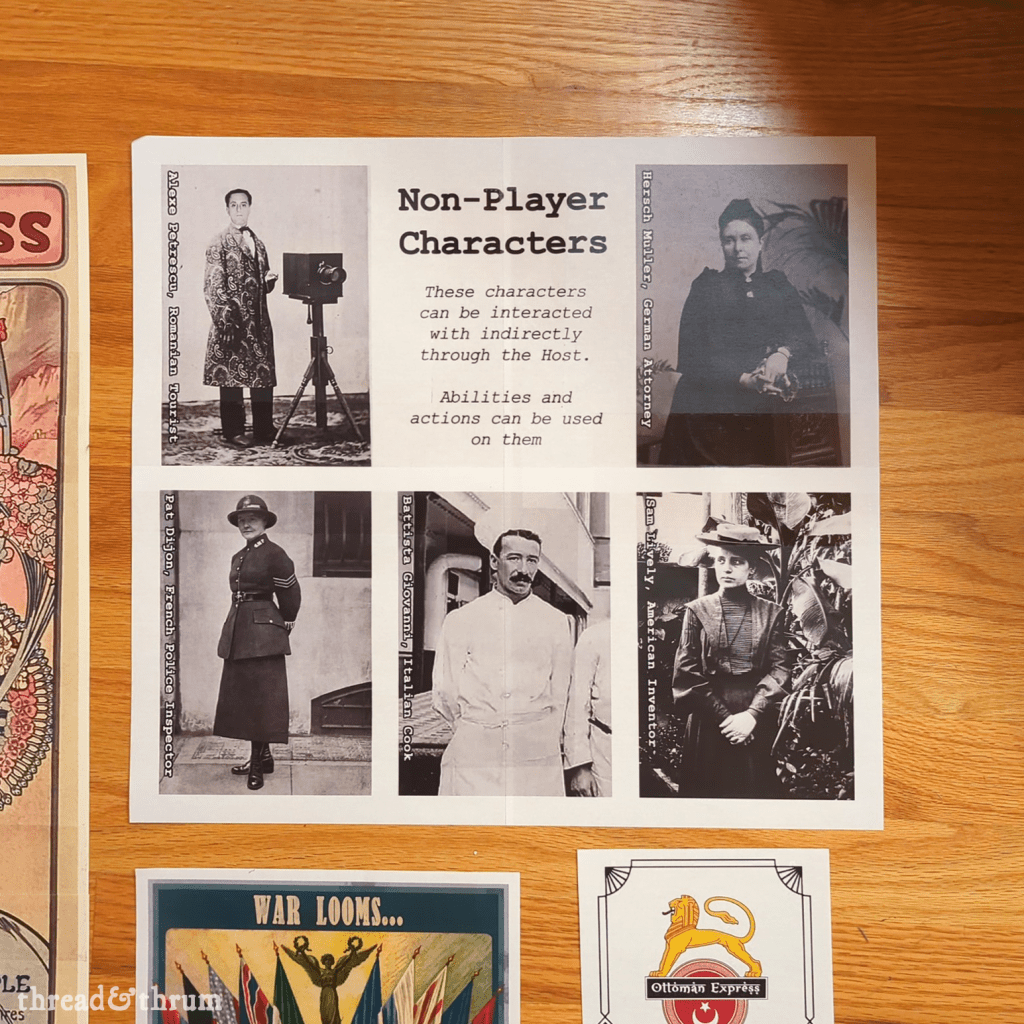
I made a poster with names and photos of Non-Player Characters (having photos was important for one plot point, more on that in the resources section), let players know that if they wanted to talk to those characters, that they should speak to the host (still imposing the “one host interaction per 10 minutes per player” rule that the game has), and made a separate area for NPC sleeping compartment items (see advice for setting up the space below).
Mismatch between character and player personalities? No Problem!
This great thing about this NPC approach is that it frees up you the host to assign characters to suit your players when you’re short on people. Obviously there are limits to this. I would argue that you wouldn’t want to play with any fewer than six people and must include Jay Middleton, Max Fairsonne, Esra Hoca, and Lou Gardet, but it does give flexibility to not hew to the game’s suggestion of who must be included otherwise. For example, Pat Dijon and Hersch Muller are dead boring characters on paper (they don’t even have any secrets!). Obviously a player could make a lot of hay out of them, but if you’re short on players, I would relegate those two to NPC roles and assign people to more of the interesting side characters3.
Timing
When the game properly starts (not when the party starts), set a timer on your phone, or note the time, and know at what times you should make major announcements based on your actual game start (not party start) time (see below).
We played our murder mystery game as part of an overnight trip for my book club, and it was important to me that everything felt laidback and easy. As such, we didn’t start the game until much later than the suggested timetable. I didn’t keep an eye on the clock, and ended up making the final 10 minutes announcement at random based on the rhythm of the game, and completely forgot to make the “hour to go” announcement!
Game Timeline
So that it’s easy for you to map the timing regardless of when your game actually starts, here are the interval breakdowns (the game does tell you to do this, it just doesn’t lay out these time segments specifically, and times from when the party starts, not from when you begin the game):
0-30ish mins: Party is starting, but game has not. Players get their packets and read them. If you’re using physical props, you might want to recommend that players look at their packets a little clandestinely so that other people don’t see their items!
Once everyone has arrived, had time to read their packets, and mingled a bit: Game begins. Start tracking your time now.
Gather everyone together. You the host should make any game mechanics announcements. You might want to mention:
-If game-specific props are marked in any way (e.g., I tied gold ribbon to anything that was a game prop except the cash, whether it was a prop card or a physical item)
-Tell folks that they can lock their sleeping compartment (mention that all of them are currently unlocked!) and stash items there
-Encourage folks to take advantage of their abilities
-Suggest folks pay attention to their Other People section in addition to their other info
Then, have Lou Gardet read Announcement #1
1 hour 30 minutes (90 minutes) after game start: Host should announce that there’s an hour to go and that all Investigation checks now automatically succeed
2 hours & 15 minutes (135 minutes) after game start: Lou Gardet reads Announcement #2, which states that there’s 10 minutes to go (there’s technically 15 minutes, but this gives people a little wiggle room). Host should encourage folks to cast their votes for who they think committed the murder. Set out the voting slips at this point.
2 hours & 30 minutes (150 minutes) after game start: The game is over! If you like, play a sound effect of a train slowing down and stopping to get everyone’s attention. Have Lou Gardet read Announcement #3
After everyone has cast their votes, keep the music going and let folks continue to hang out while you the host tally up everything.
In my organizational spreadsheet, I made a printable sheet for just this purpose. Once you’ve counted all the votes, pull everyone together and kick off the game’s conclusion.
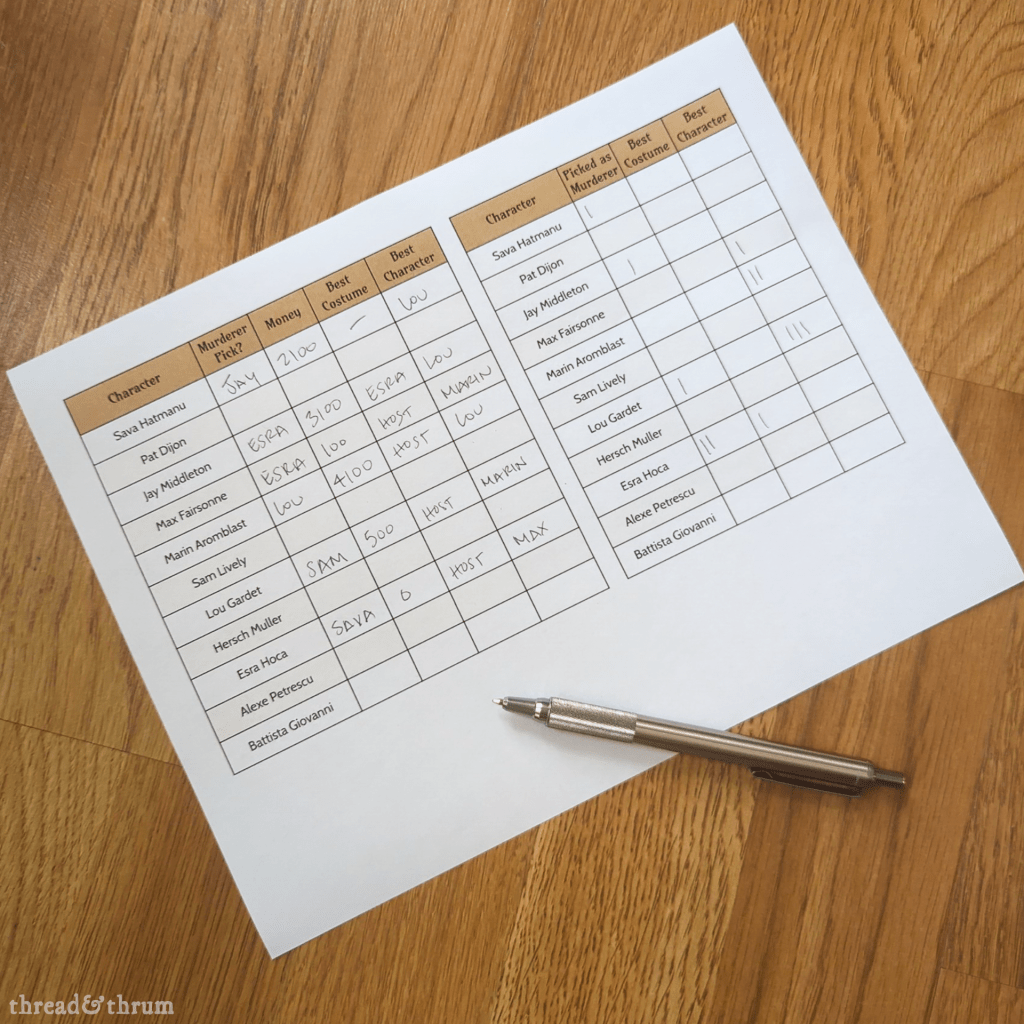
Running the Conclusion
Before rushing to reveal whodunnit, ask folks about their characters’ personal goals. There’s a printable tab in my spreadsheet for this, too. I added more questions for each character, so while you should definitely ask people the questions their booklets say you’ll ask (there’s a column with that label on my table), you can also sprinkle in the optional questions based on what you know they’ve been up to through the course of the game.
One thing I LOVE about this murder mystery is that everyone has their own objectives outside of solving the murder, so people can succeed at pursuing their own ends, regardless of if they name the right killer. This happened in our playthrough; a couple characters were so focused on their personal vendettas, they barely engaged with truly solving the murder, and just had a blast trying to stir people up against their respective enemies!
The Solution

The game suggests you have the police inspector character Pat Dijon read the solution. Since Pat Dijon was an NPC in my game, that wouldn’t be as fun as having a player read the solution.
My workaround was to tweak the solution text and make two versions: one version if a player(s) successfully guessed the murderer (with language changed so that if they weren’t the police officer character, it wouldn’t sound odd) and another version to be read by the murderer if no one guessed who they were. I think even if Pat Dijon were a player character I would do it this way, as it’s a fun reward for players who were successful sleuths.
If a player(s) guessed the murderer correctly, have them read the solution. If more than one player guessed right, they can take turns reading. The solution document is a little long, so this works well, honestly.
If no one guessed the murderer, the murderer gets to monologue about their own dastardly deeds by reading version 2!
Setting up the space
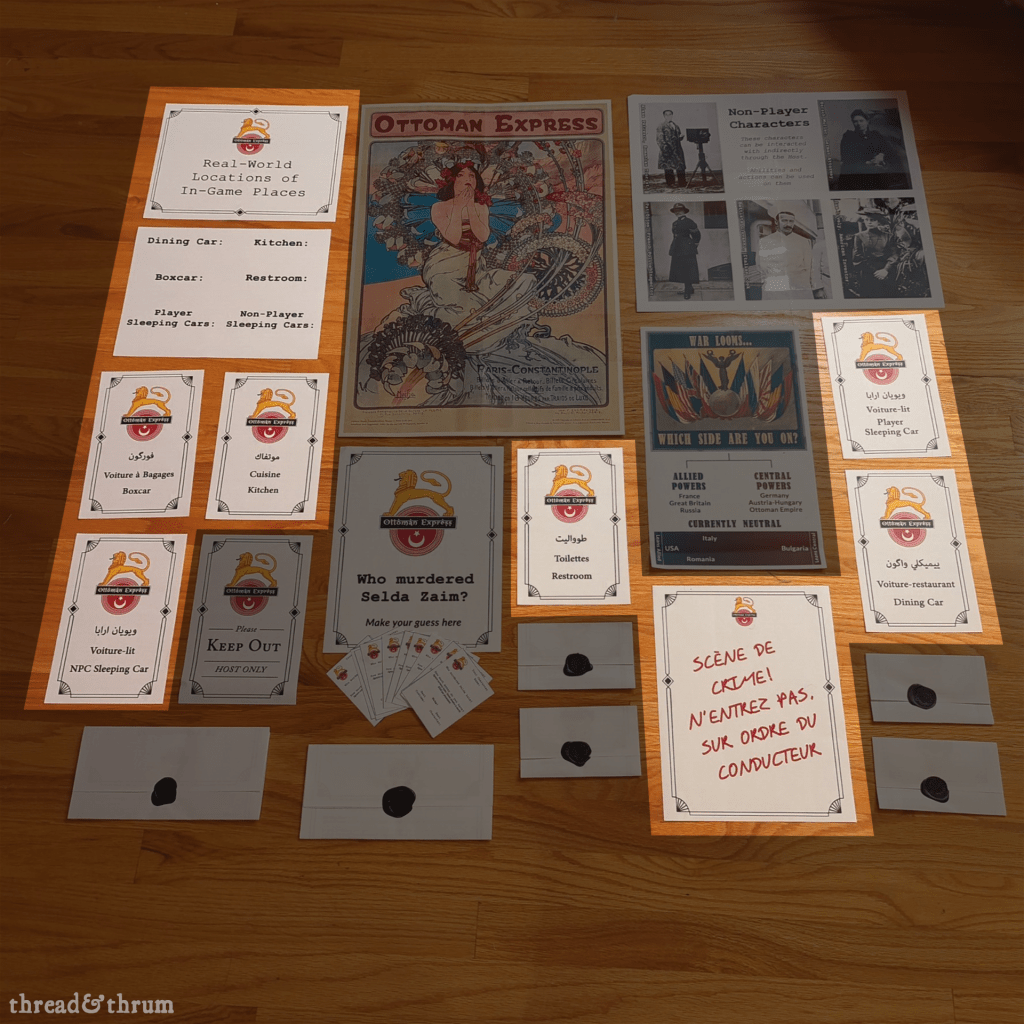
If your playing space allows, I would recommend designating small areas as these in-game rooms:
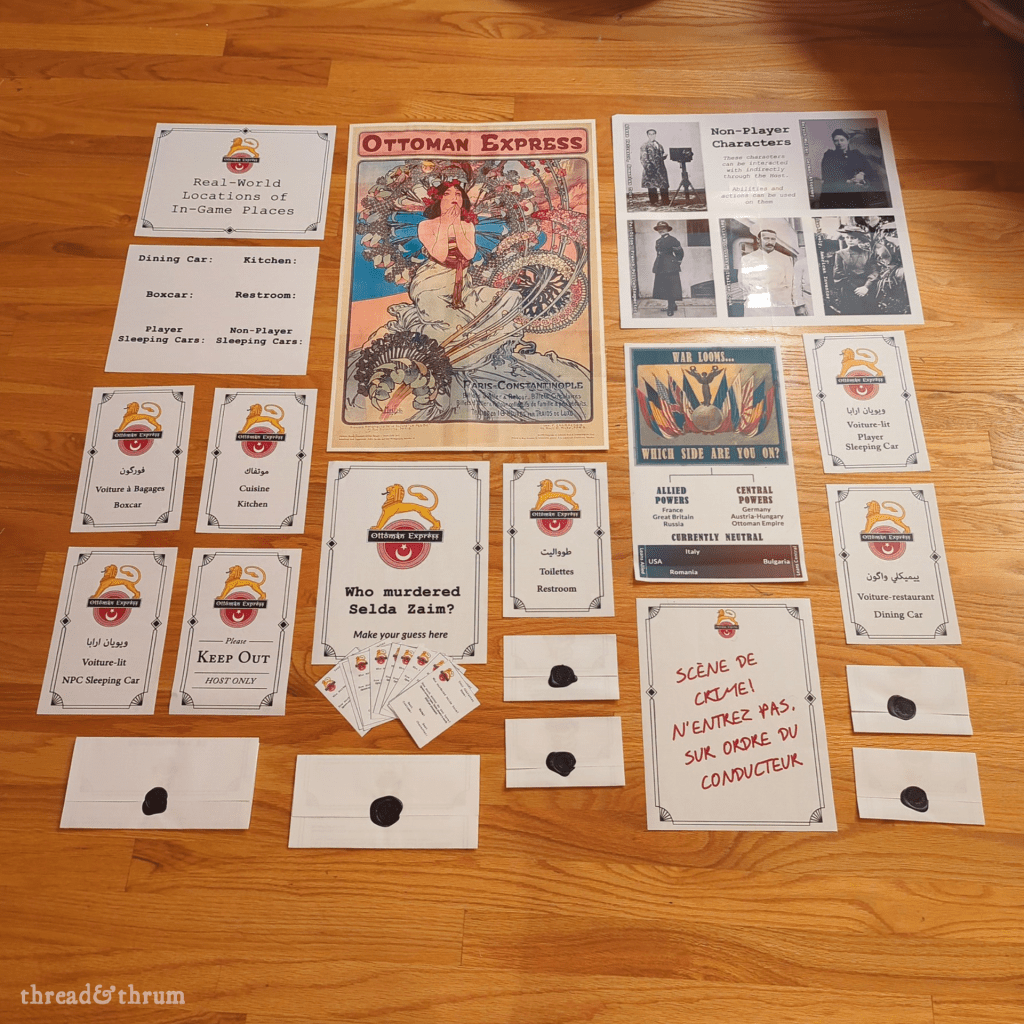
- Dining Car – This should be the base of operations and where you gather players for announcements. I also hung the Ottoman Express poster, the NPC poster, the War Looms poster, and the poster saying where each of the rooms listed below are actually located in this room.
- Restroom – This can be a real bathroom. Its plot use is brief, so doesn’t get in the way of folks using it as intended.
- Kitchen – This is the crime scene, so should probably not be the real kitchen in your space, unless you’re not using your kitchen during the party.
- Boxcar – This space will hold 2 crates (or props representing them) and is good for clandestine meetings.
- Player Sleeping Car – Keep an opaque, closeable box in this space so players can stash items and as a place to keep starting items stashed. I used a prop treasure chest and put the sign pictured below on it.
- NPC Sleeping Car – Ditto as above with the box, you’ll just use it for NPC items. I used a book safe with the same “Keep Out” sign on it.

In the Resources section below, I linked files to the signs I made for these spaces (and for everything else, too).
Ambiance
Sight
I used posters and signs to delineate the space. If it’s possible and practical, dimmer lighting will set the mood and mimic the less powerful electric lights of the era.
Sound
Music: I played music in the dining car area. Initially I tried to curate a playlist of only 1910’s music, but honestly, most of it is basically unlistenable due to the recording limitations of the era. I’m sure faithful remakes would sound perfectly lovely (and recordings in the 20’s and later might be of songs written in the 1910’s), but I couldn’t trawl through enough media to pull it together in time. As such, I’ve made a playlist of music from the 20’s and beyond which evokes the right mood, while also being very listenable. You’ll want to shuffle play:
Murder on the Istanbul Express Soundtrack
Ambient noise: I had a small speaker in the boxcar area on which I played train sounds. There are lots of options on YouTube for this, I just put this one on.
Smell
Obviously defer to player needs on this one (i.e., if people have smell sensitivities maybe skip this one. I do, so in the end I forwent having a scent hanging around to keep me from getting a headache), but luxury venues often have a signature scent. Turkish rose would be a great aroma choice for a fancy train from the Ottoman Empire, but use your imagination! Orange blossom, jasmine, cedar, or sandalwood would also be pleasant, evocative choices.
Taste
If you the host are handling food, keep things dead simple and firmly in your wheelhouse. But if you can delegate this task to someone else, it gives them the opportunity to explore food from 1914 if they so wish! I didn’t suggest this, but my friend who handled the food for me is a stellar cook and historical afficionada and she found the wonderful Mrs. Beeton’s How to Dine. While the book was published in the 1860’s there are plenty of fun ideas and inspiration (and some staggering serving amounts) for party foods. And just to show off the fancy fare we got to enjoy, here was part of the menu my friend crafted:
Kale Salad with Balsamic Vinaigrette
Summer Cucumber Salad
Benedictine with Sourdough Crackers
Curried Potato Hand Pies
Spaghetti Puttanesca
Italian Roast Potatoes with Garlic & Rosemary
Garlic Bread
Iced Tea
Mint Lemonade
Peach Cobbler
Caraway Seed Pound Cake
Rose Sugar Shortbread
Touch
I love making and using props! This game afforded lots of propportunities (heh).

Ordering a prop sword for use in the game was the tipping point: my partner Justin suggested that perhaps players would not appreciate having to sneak something as big as a sword around. I defer to him on stuff like that, so my new rule became that any item players would be expected to schlep around should not be bigger than one’s hand. This worked well both for players (some of whom started the game with way more/bulkier items on their person than others) and for me the host. There were still plenty of tactile items to play with, but nothing too unwieldy to carry.
For items that I deemed too big to use in the game, I just used the handy cards provided by the game makers! All props used in the game (except the cash) were marked with gold ribbon, including these cards.
Resources
I found and made a bunch of goodies for the game, please feel free to use them in yours! Of course, because I changed the name of the train, that might present some logistical difficulties to use things as-is, but hey, ya get what ya pay for. I’m including editable files, so if you have a little skill in graphic design, tweaking things should be no prob.
First and foremost, staying organized is key to making game prep and running the game go smoothly! I love spreadsheets, so I made a multi-tab organizational spreadsheet to help me keep everything straight. This made creating player packets and organizing the physical spaces really easy.
Fonts
Not the most exciting area in which to start, but if you are planning to edit stuff, you’ll want these downloaded at the outset.
Note: In 1914, Turkish was still written in the Arabic alphabet (a big thank you to the folks at Lexilogos for their Ottoman Turkish keyboard4!), so I used typefaces that are inspired by Arabic script when I wanted to write something “in Turkish” but still have English-speaking players be able to read it.
Romanian, on the other hand, was written in the Latin alphabet as early as the mid-1800’s (it was written in the Cyrillic alphabet prior to that). But I fudged on that detail for the Spies List document because I wanted to convey that it was in another language than English. I apologize to Romanians, the different language signal and propaganda shorthand utility were just too good to pass up.
Arabic-Inspired Fonts
Bulan Ramadhan – Used for Esra Hoca’s handwriting
Ramadhan Karim – Used for the Hoca Cashmere logo text
XXII Arabian One Night Stand – Used for the Ottoman Express logo text
Cyrillic-Inspired Fonts
Kremlin – Used on the Spy List
Kyrilla – Used on the Spy List
Other Fonts
Alphonse Mucha – Used on Ottoman Express Poster
Scribbled Sans – Lou Gardet’s handwriting on crime scene sign
Ancient Geek – Used on Greek newspaper clipping
Fonts for the Metal Polish Label
Physical Items
These will mostly be links to products (non-affiliate) I found that fit the bill.
Lockpicks – I sewed a little roll-up carrying case for these, too.
Train Keys – One set is all you need, enough for each employee to get 3 keys. I tied them together with the gold ribbon that indicates they’re props.
Pocket Watches – The base game calls for three pocket watches. This listing is for two watches, which is all I ordered, since the third watch was owned by an NPC character in our playthrough (though if you play with the optional character Cato Janssen, you’ll need 4 pocket watches total). They feel nice for the price (US$5 each as of July 2024).
Sword – If you do want to give your players the challenge of smuggling a sword around, this one is a good size and looks nice for the price point!
Tins for Silver Polish and Engine Oil – These added a tactile feel to the murder scene and gave one of the characters a challenge to hide one of them. Here are the labels I made for them.
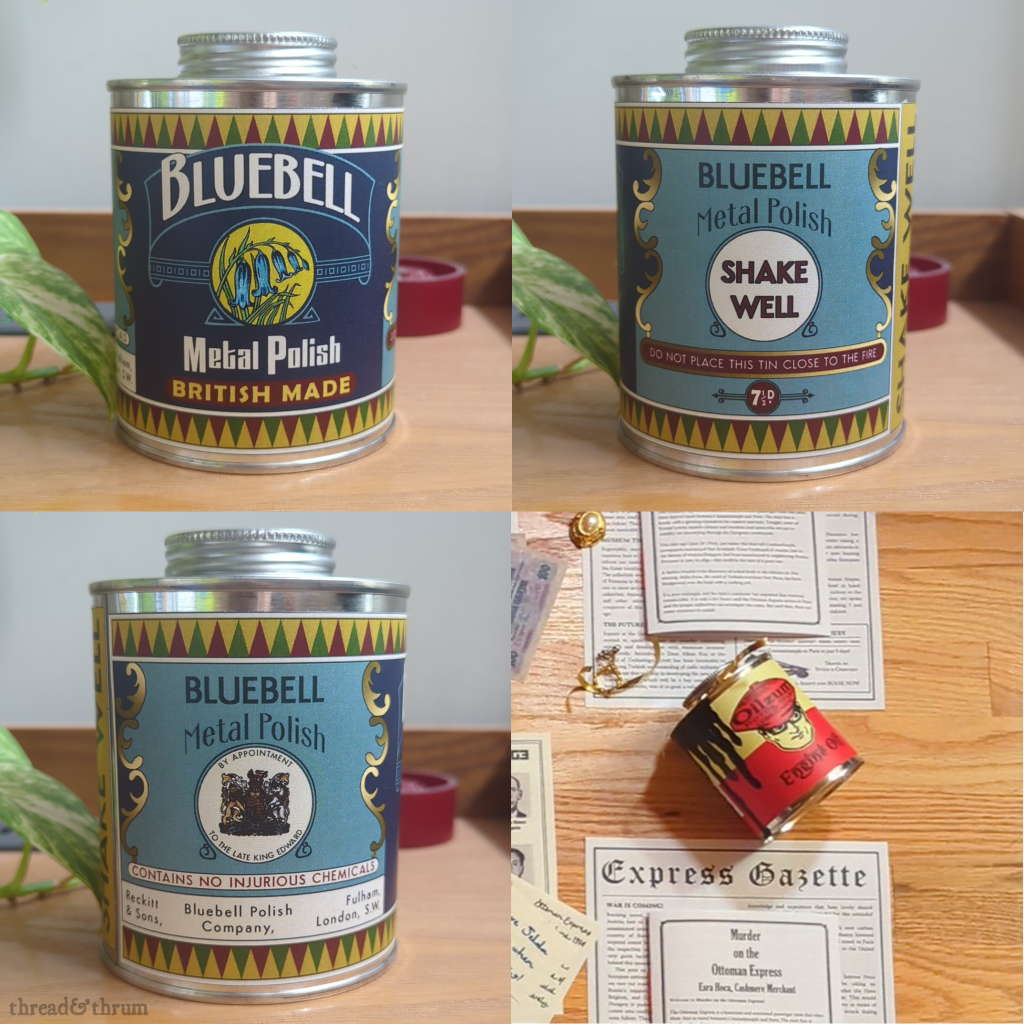
I recreated the Bluebell Metal Polish label based on these great photos (this tin is from well after 1914, but the label was too cool to pass up on), which was a lot of fun! I made it look like the polish had spilled for the game (it’s a plot point) by following these instructions, though I heavily reduced the amount of glue used.
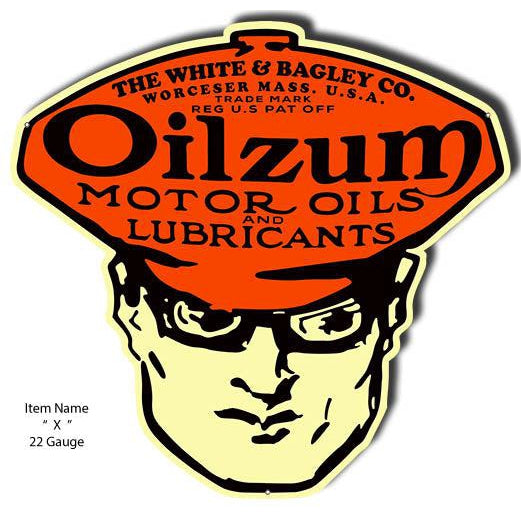
I wanted to do something similar for the engine oil label, but wasn’t able to find quite as clear of can labels, and nothing for Turkish engine oil from the period–I don’t think I had the right search terms for that, though. In the end, I created something very similar to this can (big shoutout to the collectors on this forum for all the photos they’ve posted of Oilzum products!), using this logo image. I also painted some black marks on the can label to show that it had been poured, then I put a little bit of water in it and glued the lid shut so it sounded mostly empty (again, both are plot points).
To attach the labels, I cut them out, sprayed them with a spray adhesive and carefully affixed them to the tins.
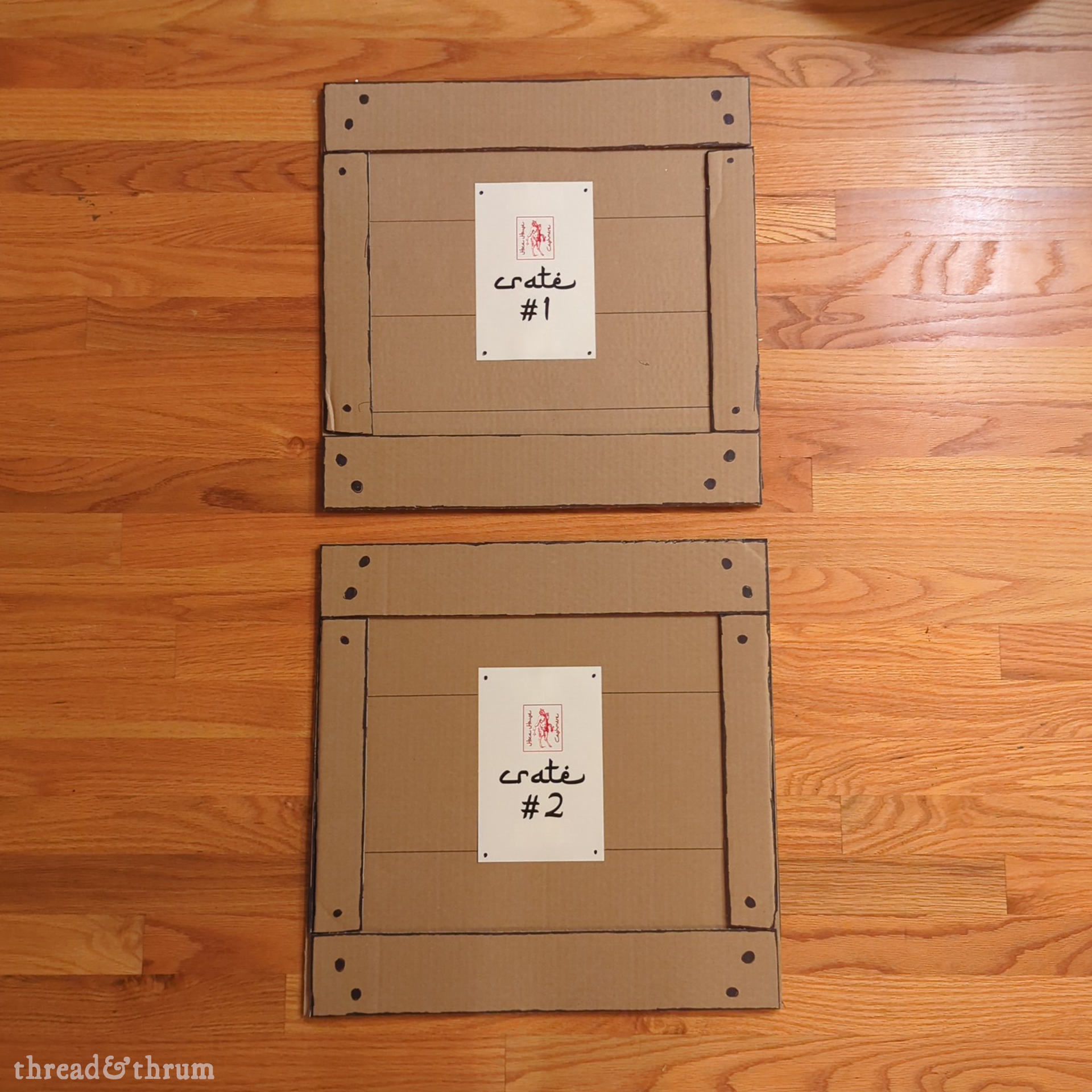
Crates for Boxcar – Instead of literal crates (which I briefly considered), I made the fronts of crates out of cardboard and attached them to the walls of the space I used as the box car.
To Make:
Cut out a cardboard square (I made mine 18″ | 45cm) and use a marker and ruler to draw lines across for the planks of the crate.
Then, cut the outer frame “planks”:
I goofed on my math, which is why my top/bottom and side planks are different widths. Do it this way:
–For the shorter, side planks: make them 2″ | 5cm wide (if your crates are closeish in size to mine, adjust as needed).
For the length, subtract 4″ | 10 cm. Cut out 2. After cutting, draw along the edge with marker to give them a more defined outer edge. Color in some circles for the nail heads
–For the longer, top and bottom planks: make them 2″ | 5cm wide (if your crates are closeish in size to mine, adjust as needed). For the length, cut them the same width as your background square (18″ | 45 cm for mine).
Glue or tape them into place as shown in the photos. Print out these crate labels, cut them out, and attach them as well.
I was tempted to have sweaters spilling out of the tops of the crates and to have those sweaters mussed up in plot-relevant ways (I had some good sweater scraps lined up that I had nabbed from work), but ran out of time.
Print Props
Below are all the files for printing various props to use in the game.
In-Game Cash
While the game makers wisely opt for simplicity and recommend just using their fake US$100 bills for all the cash, I thought it would be fun to have everyone carrying around period-appropriate bills from their characters’ countries. To keep things clear, I tweaked the text in the player booklets and on their item slips to say that all cash is treated equally, the different currencies are just for flavor. No one was confused by this, and people enjoyed seeing the different bills.
These are all printed front-only. I tried to find bills from 1914, but had to fudge a little on some of them.
Ottoman Lira – This note is from 1918, I couldn’t find one from earlier without going into the 1800’s
Romanian Leu – Print 3 copies of this one
Bulgarian Lev – This note is from 1906, couldn’t find any from the 1910’s
German Mark – This note is from 1910
Belgian Frank – Only print if using the character Cato Janssen. I used the back of the bill because it’s much clearer than the front
Player Items
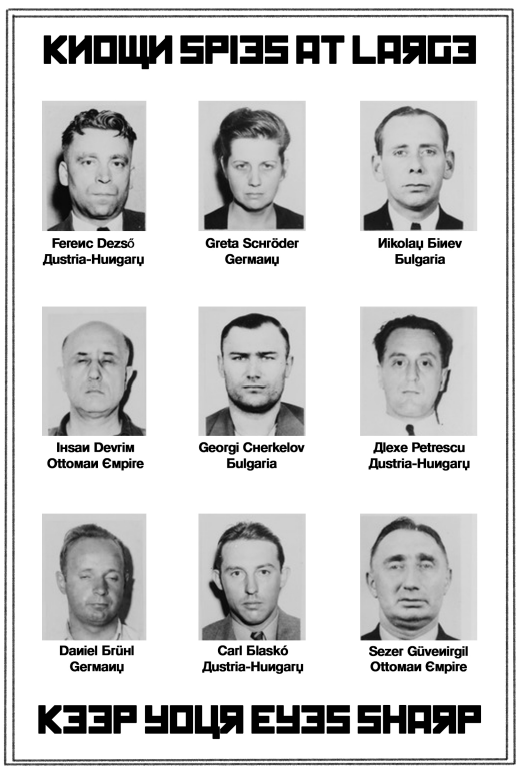
List of Spies – Issued by the Romanian government, this is a little piece of propaganda warning citizens to be on the lookout for these known spies (one of whom is a character in the story). The photos I used are of real spies (though from World War II) from the Duquesne Spy Ring. After I decided on the nationalities of the spies, I trawled through Wikipedia pages with names of actors from those countries for inspiration.
Again, sorry to my Romanian friends that I used a mock-Cyrillic alphabet!
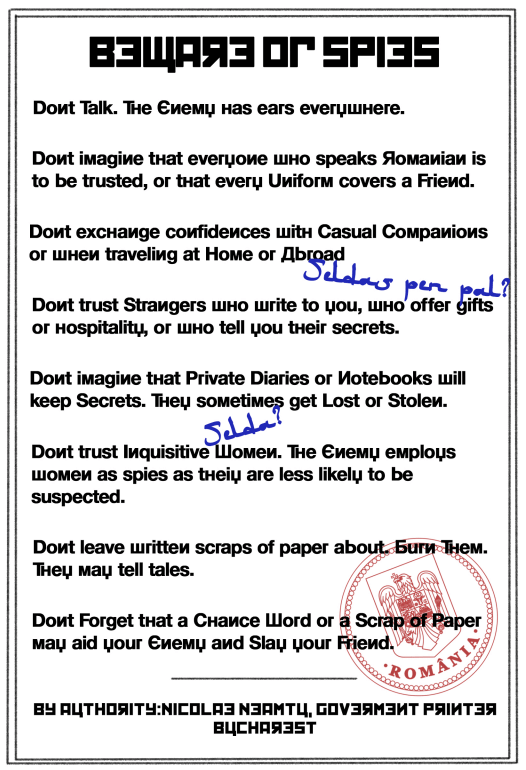
The ominous warnings on the back were taken from this actual piece of propaganda from World War I (I threw in the line about inquisitive women, which was taken from another WWI poster).
It’s a plot point that a couple characters think the murder victim might have been a spy and this let me make that theory a little more obvious for the person who starts with the spy list document on their person.
There are 3 versions of the spy list: one you can use if the spy character Alexe Petrescu is an NPC (there is a NPC image that matches his face in the spy list document), another with a blank spot for you to add a picture of your Alexe Petrescu, and another with a question mark square if you have a player playing Alexe Petrescu but for whom you don’t have a photo. Print out whichever one you need, then print the propaganda warnings on the other side.
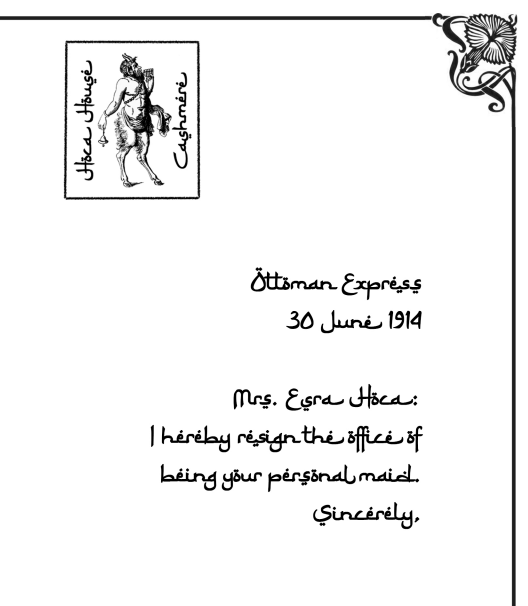
Resignation Letter – One of the characters is planning to fire their maid at the end of the journey and they penned a resignation letter that they’re planning to make the maid sign upon arrival in Paris. Both characters are Turkish, so I used the mock Arabic alphabet script Ramadhan Karim and aligned the text on the right.
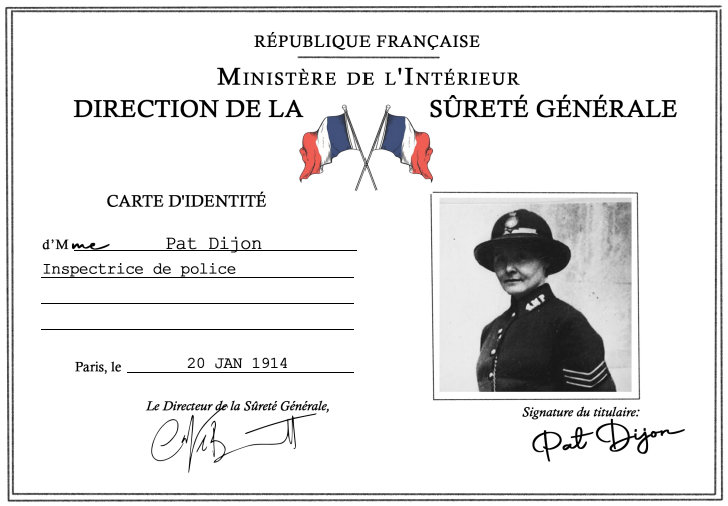
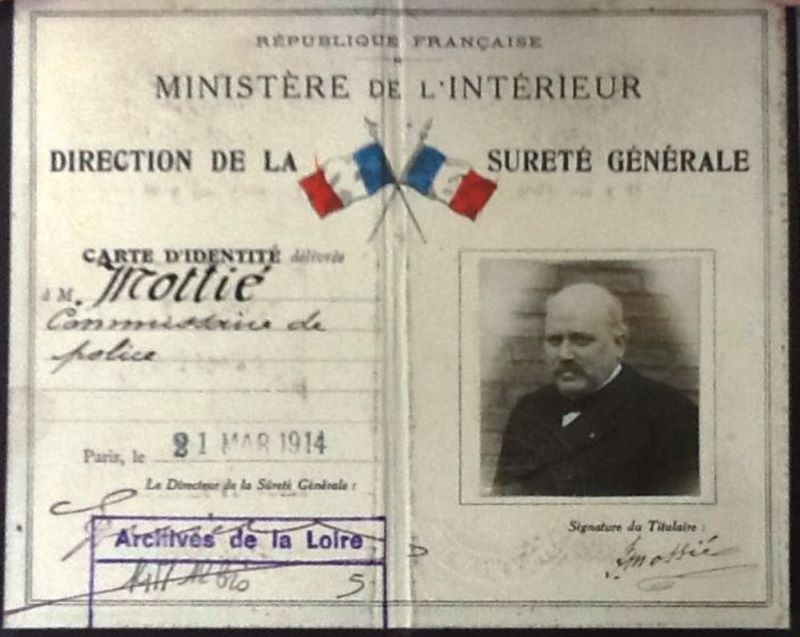
Police ID – Pat Dijon is a French police inspector heading home from holiday. I found this nifty police ID–for the police commissioner no less!–from 1914 and recreated it.
The linked PDF has a few options:
-Versions with blank spaces if you have a photo of your player, both male (Inspecteur) and female (Inspectrice. I had Pat “write in” the “…me” to make it Madame instead of Monsieur). Print one based on the best gender fit for your player.
-A male and female version with the coat of arms for the city of Paris if you don’t have a photo of your player (again, only print one based on the best gender fit for your Pat Dijon player)
-An NPC version of Pat Dijon using a photo of the indomitable Lilian Wyles.
Just print one page for whichever you need. I’d recommend printing it on cardstock.
Letters from Selda – One of the characters is carrying around a packet of letters they received from Selda Zaim. I penned four, one each for the last four years, and especially in the last one tried to set the tone of the relationship from Selda’s perspective.
Crumpled Letter – A player can investigate the dining car to find this letter. I kept it in my nifty book safe and handed it to the first player to perform a successful investigation check of the dining car.
Jay Middleton Business Cards – Print on cardstock and cut out.
Greek Newspaper Clipping – I’m not super happy with how this one turned out. Edit a friend’s photo to add a mustache and put that photo into the space, then print it double sided and cut it down. If you don’t have a photo of your player that you can use, I would just use the item card provided by the game makers.
Radio Coil Blueprints – Print on light blue paper if you can.
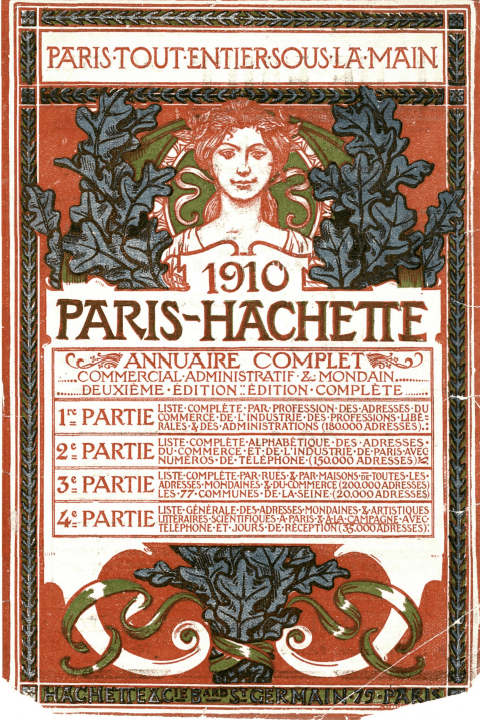
Paris Directory – Print booklet style. I printed it on cream colored paper. These are some pages excerpted from the 1910 edition of the MASSIVE real Paris Directory of the era.
Scientific Paper – The paper is in German because that was the closest thing to a lingua franca for the scientific community in the early 20th Century, but the paper I used has nothing to do with the title.
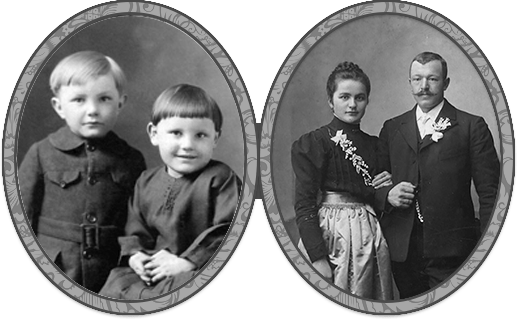
Locket Photos – If you decide to use an actual locket, you’ll probably want to find your own photos for this, just remember that the photos in the locket would be from the late 1800’s (i.e., the clothes in the portraits shouldn’t be Edwardian, they should be Victorian).
I found this great couple’s portrait in which the lady looked uncannily like my Sava Hatmanu player. I also found this album of vintage twin photos, but didn’t end up using any because my twin characters were a boy and girl and none in that album really fit the bill. The text of the game kind of suggests that the twins in the photo are a little bit older than babies but not so much older that the kids would have had clear memories of one another, so I used this photo instead.
I ran out of time to find a physical locket, so I put these photos on the back of the locket item card provided by the game makers, just for added flavor. When I run this game again, I will use a real locket!
Signs & Posters for the Game Space
You can print these to set the scene in your space. The only wrinkle is that everything says Ottoman Express, so if you’re keeping the name as written, you’ll need to tweak the logo.
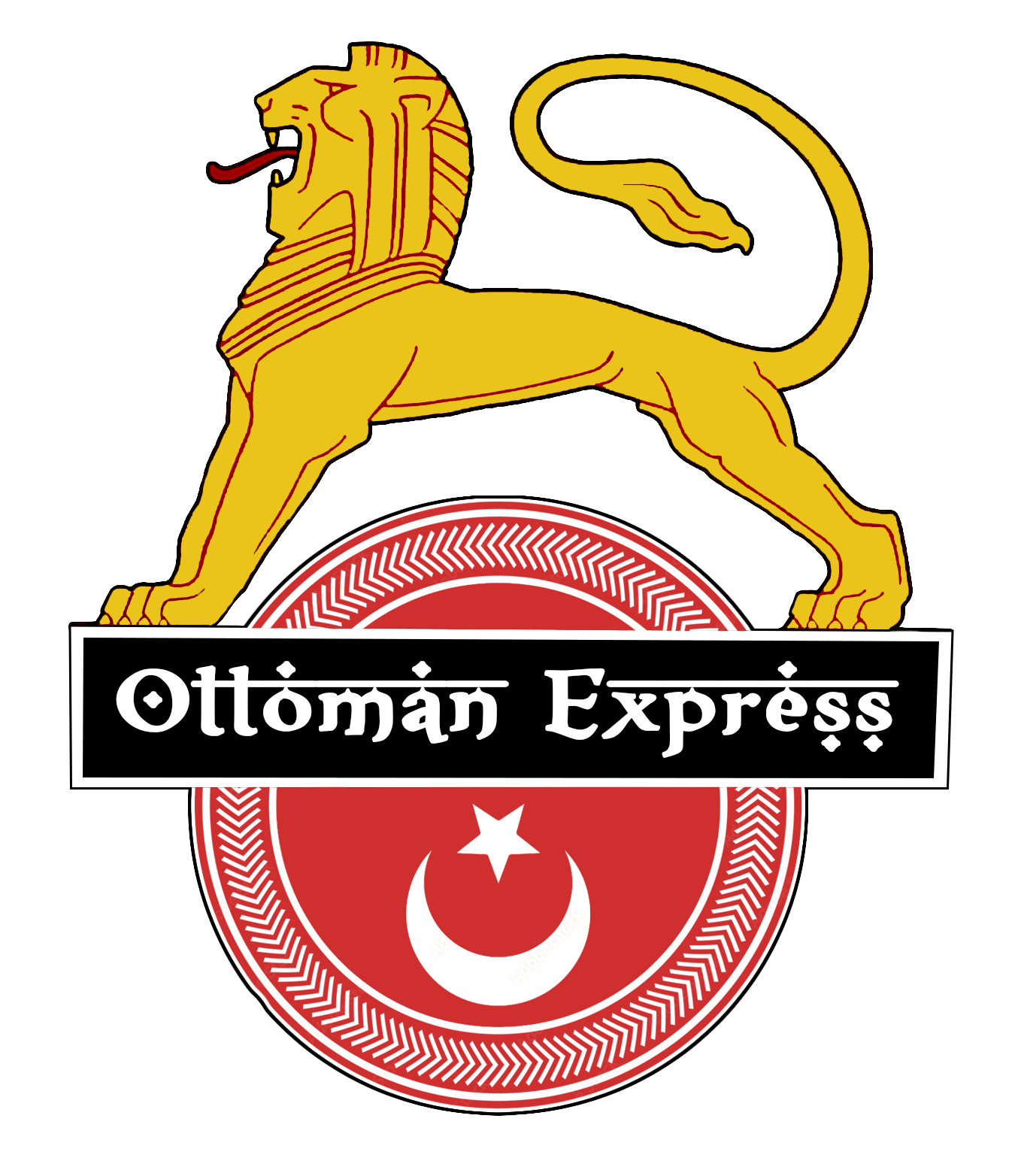
Ottoman Express Logo – I’m putting this first because if you need to make things say Istanbul Express (or something else), you’ll want to edit this before anything else!
I based the logo on the old-school British Railways logo, replacing the wheel with a seal from the Ottoman Empire and added my own text. Here is the PSD version. The font used is XXII Arabian One Night Stand.
Rooms & Game Locations Signs – I made most of the room location signs half-sheets, so you don’t have to print quite so many pages. Just cut them in half once you’ve printed them. The handwritten note in French is optional; it just adds flavor and communicates which room is the crime scene. I hung it under its respective sign.
Host Only Signs – If you decide to manage items the way I did and need designated containers for player and NPC props
Voting Sign & Slips – I set these out when Lou Gardet makes Announcement #2 (i.e., when there’s 15 minutes left in the game) and let players know to cast their votes! There was a jar in place for people to put their filled out slips.
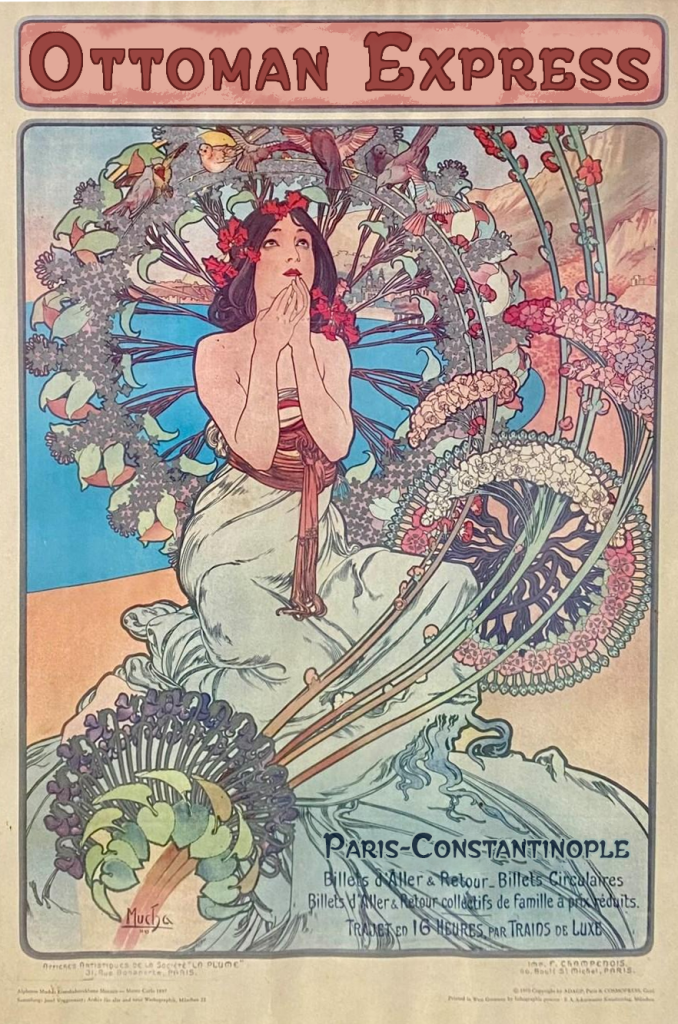
Ottoman Express Poster – I reworked this Alphonse Mucha poster for PLM Railway Services to read Ottoman Express and Paris-Constantinople. You’ll need to grab the PSD file to edit it (font used: Alphonse Mucha).
Print it poster style.
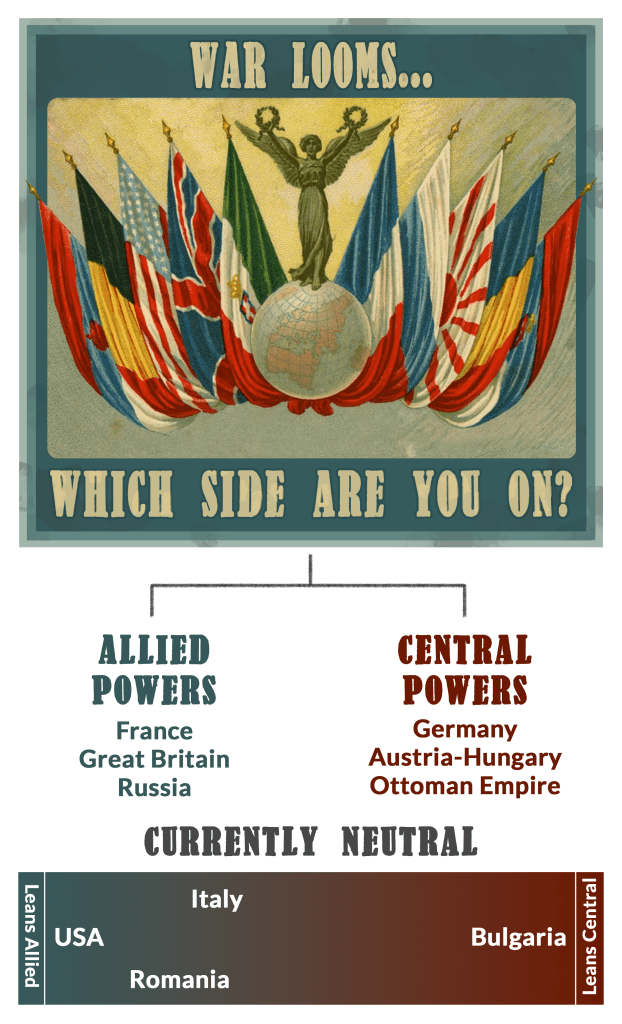
War Looms Poster – This is a visual for the different factions at the start of WWI. Again, the game makers smartly went for simplicity and just said “these countries are on one side, these countries are on the other,” but I know many of my friends are history buffs, so I added a little more nuance to convey the same info.
I used this 1917 Italian WWI victory print for the main art and took inspiration from various propaganda posters of the era for the lettering.
I printed it on legal size paper (8.5×14 | 21.6×35.6), but if you don’t have that on hand, you can print it poster style.
NPC Banner & Usable Photos – This one has plenty of room for flexibility! While in my game, I created a single poster to print that combined the banner and the images of the NPC’s (non-player characters. See below), if I did it again, I would use the banner linked above and print out individual photos with the person’s name, nationality, and profession written or typed on each.
If Alexe Petrescu is an NPC in your game and you use my spy document that has a picture of him, you might want to use this photo, which has the same face on it as the spy list.

There are lots of resources on the web for old portrait photos, and lots of ways you can approach finding them. The Elliott & Fry archive is excellent, and genealogical research sites often have pretty beefy photograph databases. Looking at the Wikipedia entries for political leaders from this period can also yield good results since they’re likely to have photo portraits.
You can also use the game source material for inspiration. For example, in my game, Sam Lively was a lady, so I went looking for scientists of this era and found this great photo of Lise Meitner the Austrian physicist to use. And likewise, when I was having trouble finding an Italian chef from this era, I found this photo of folks who were on the crew of the Titanic, and the gentleman on the left had the right vibe to me, may he rest in peace.
Conclusion
I had a blast with this game from top to bottom and can’t wait to run it for another group of players! Hopefully some of the advice and resources in this game got you inspired to run Murder on the Istanbul Express as well. Let me know if you have any questions or other ideas!
Footnotes
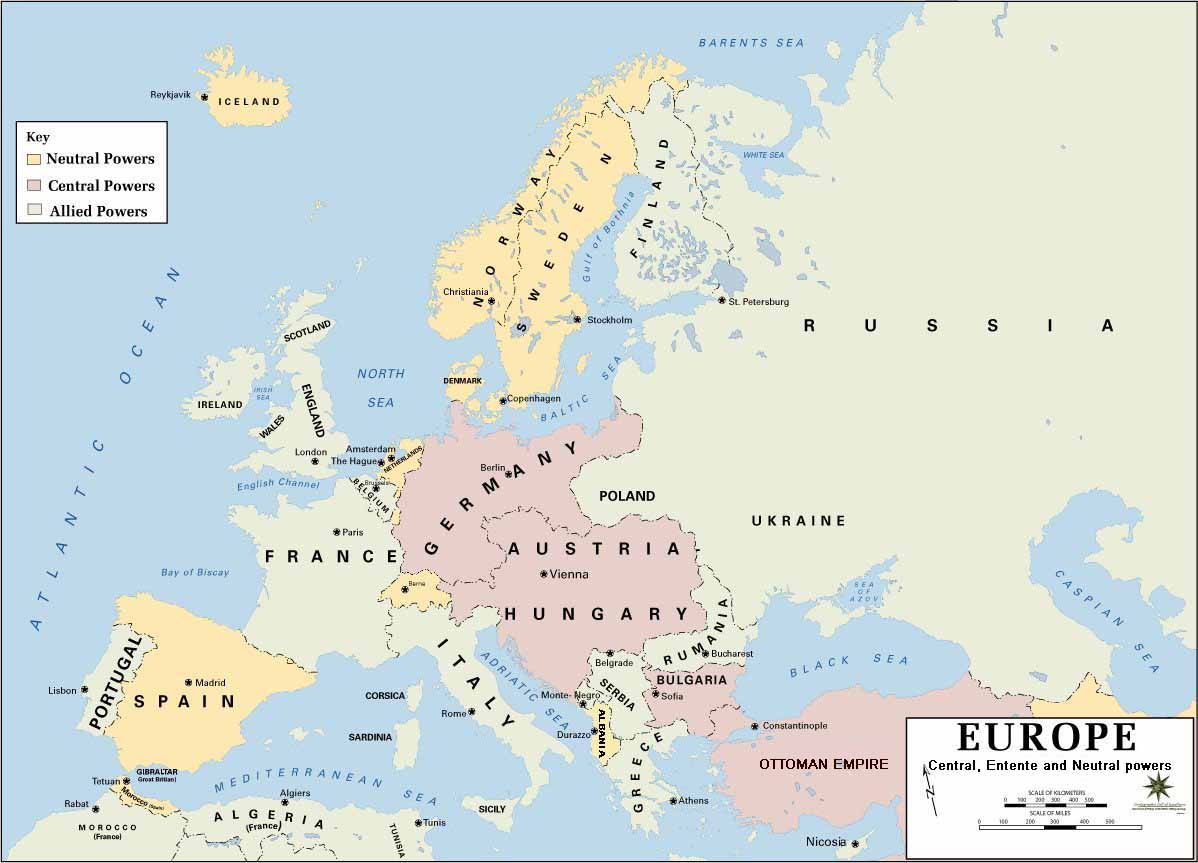
- I think it was intentional because the train route map in the provided game material used this map of Europe on the eve of WWI. This map says Constantinople, so the graphics maker for the game had to change it ↩︎
- A piece of evidence was called engine grease in the game materials, and it was described as being poured over something. To me, grease isn’t pourable, it’s too viscous (this was seconded by players; I forgot to change the wording in the instructions document, so when I read out a clue about a particular area involving said engine oil, I still said engine grease and the player immediately thought this was a plot point saying, “Aha! Engine grease isn’t pourable, so something else must have happened here”). I changed this to engine oil on the prop itself, and in the character packet for the character who messes with the engine oil. It’s possible the grease vs oil distinction is a difference between UK and American English (Freeform Games are based in the UK, and myself and my players are American) ↩︎
- But you know your players best! If you have a player who isn’t as comfortable with roleplaying or has a more reserved personality, those characters are a great choice. This was just an example. ↩︎
- Use Google Translate to put something into modern Turkish, then paste that into the Lexilogos keyboard to get the output in (roughly, I would assume) the Arabic alphabet version. There are some sounds represented by modern Turkish that aren’t in the Arabic alphabet it seems, so it might take a little creativity. Note that Arabic script goes from right to left ↩︎
 Thread & Thrum

.jpg)


.jpg)